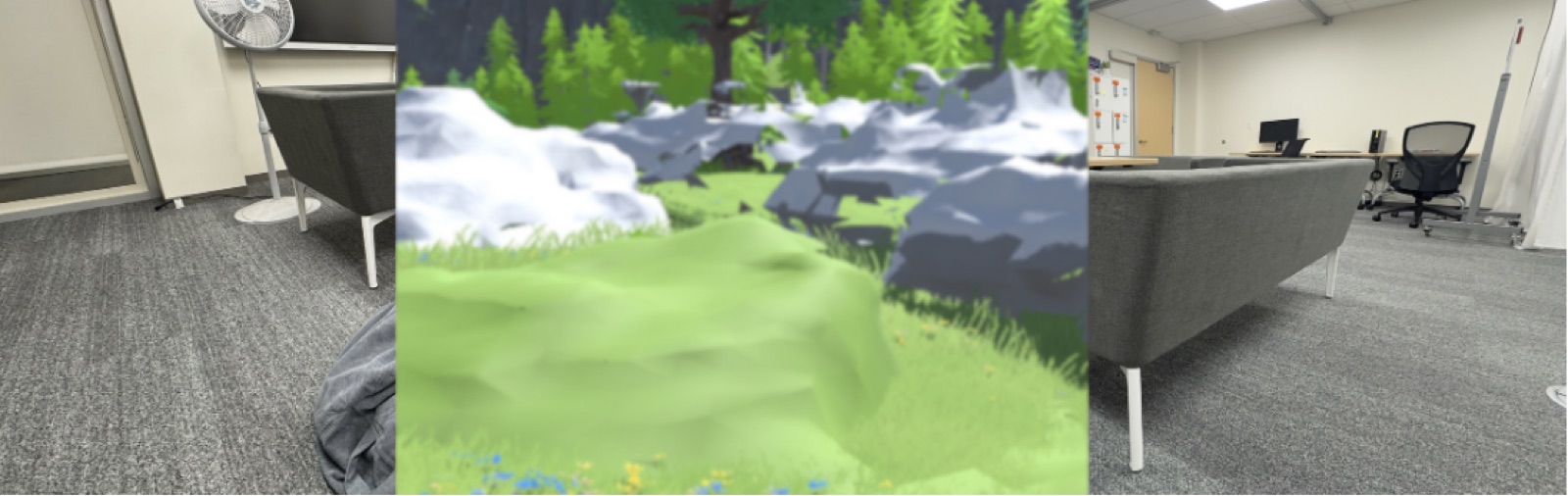
In VR, free movement in real space enhances immersion but raises the risk of colliding with real-world obstacles. Prior work substitutes obstacles with context-related virtual objects but treats every obstacle the same, which can reduce awareness of high-risk obstacles and miss the chance to use low-risk ones for haptic feedback and interactivity.
Chameleon classifies real-world obstacles by risk level and substitutes them with context-related virtual objects whose appearance matches each obstacle’s real-world risk, keeping users both safe and immersed. A preliminary heuristic evaluation assessed the usability of visual textures as an implicit signal of obstacle risk.